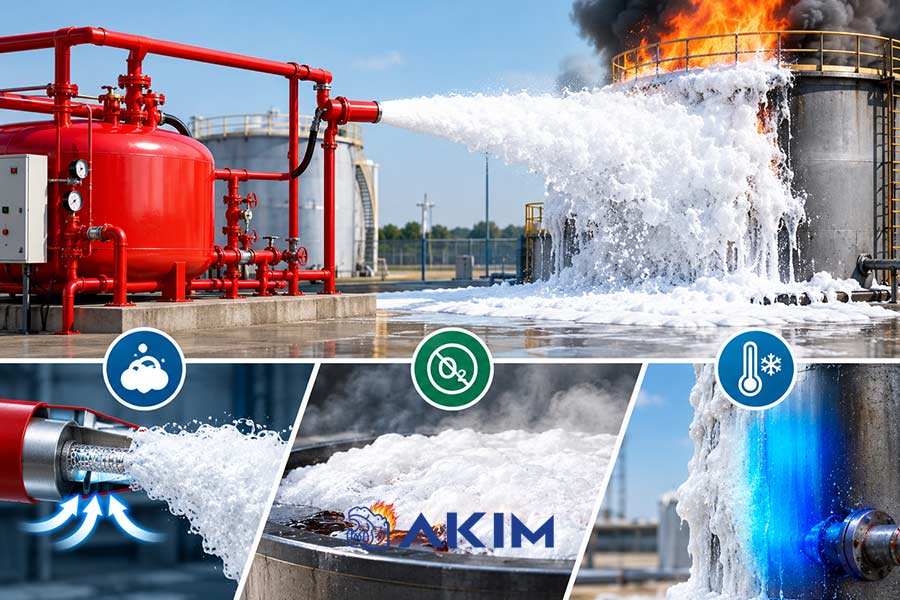
Foam Fire Suppression Systems are one of the effective fire suppression solutions used particularly in areas where flammable and combustible liquids are present, with the aim of controlling fires within a short period of time. The system covers the fire surface with a layer of foam, helping to prevent contact between the fuel and oxygen and reducing the risk of re-ignition.
Foam systems may be used in high-risk areas such as fuel facilities, aircraft hangars, chemical plants, fuel storage areas, and industrial production facilities. However, the same foam type or application method is not suitable for every facility. The appropriate system should be designed by taking into consideration the source of the fire, the properties of the fuel, the storage method, environmental conditions, and applicable standards.
Operating Principle of Foam Fire Suppression Systems
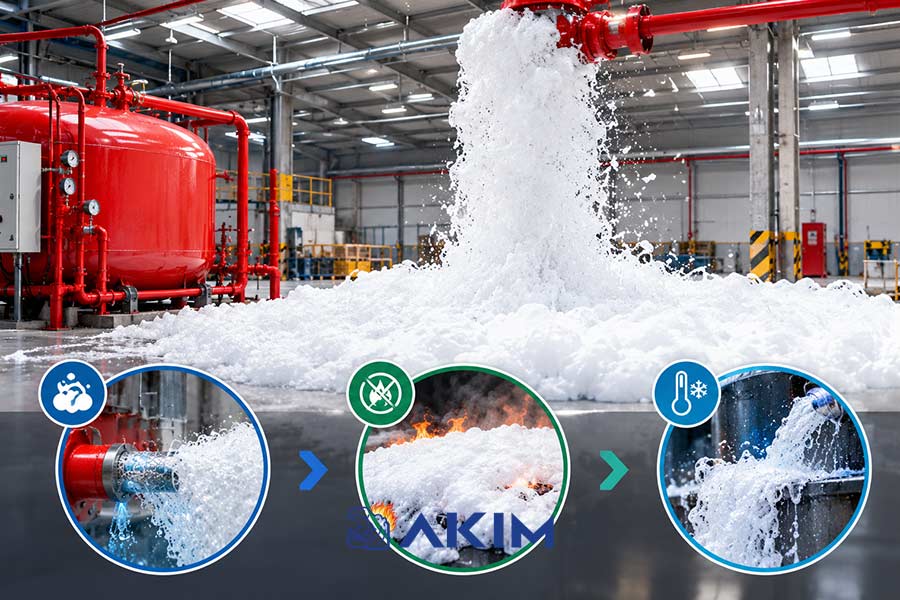
The operating principle of Foam Fire Suppression Systems is based on preparing an appropriate amount of foam solution after fire detection and applying it in a controlled manner to the surface that needs to be protected. The foam covers the fire, limiting oxygen supply while also reducing the temperature of the fuel surface and helping to minimize the release of flammable vapors.
System performance does not depend solely on foam discharge. Foam concentration, water flow rate, application duration, foam expansion ratio, and the characteristics of the equipment used should all be evaluated together.
1. Detection
Fire detection systems or facility-specific detection equipment detect the fire as early as possible. Following detection, the control system activates the foam fire suppression system according to the designed fire scenario.
2. Proportioning
Water and foam concentrate must be mixed at the specified ratio. The proportioning process is carried out according to the characteristics of the foam concentrate and the application ratio specified by the manufacturer. Proper proportioning is critical for ensuring that the system delivers the expected performance.
3. Expansion (Foam Generation)
The prepared foam solution is passed through suitable foam-generating equipment, where it is mixed with air to produce foam. The expansion ratio of the resulting foam may vary depending on the equipment used.
4. Smothering and Cooling
The resulting foam blanket covers the surface of the flammable liquid. This reduces contact between oxygen and fuel, while the water contained in the foam provides a cooling effect on the surface. These two mechanisms play an important role in controlling the fire and reducing the possibility of re-ignition.
The Main Types of Foam vary depending on the chemical composition of the fuel and the fire scenario. When selecting a foam concentrate, not only fire suppression performance but also environmental requirements, operating conditions of the facility, and applicable regulations should be taken into consideration.
AFFF
AFFF is one of the foam types used particularly for hydrocarbon-based flammable liquid fires. By rapidly forming a film over the fuel surface, it helps limit the spread of fire. It has historically been widely used at airports, fuel storage facilities, and various industrial facilities.
However, current environmental regulations and the specific conditions of the facility must always be taken into consideration when selecting a foam concentrate.
Protein and Fluoroprotein-Based Foams
Protein-based foams are produced using concentrates derived from natural protein sources. They are particularly known for their ability to form a durable foam blanket over hydrocarbon fires. Fluoroprotein-based products can enhance certain properties of protein foams, providing more controlled spread and improved performance.
AR-AFFF
AR-AFFF is developed for use with flammable liquids such as alcohol and other polar solvents that can break down conventional foam. Since these fuels can degrade water-based foams, a foam structure capable of forming a suitable chemical barrier is required. Therefore, foam selection is particularly important in facilities containing solvents, alcohol, or similar products.
Types of Foam Based on Expansion Ratio
Types of Foam Based on Expansion Ratio refer to the amount by which the foam increases in volume during generation. As the expansion ratio increases, a larger volume of foam can be produced from the same amount of foam solution. Depending on the characteristics of the application area, low-, medium-, or high-expansion foam systems may be used.
Fuel facilities, flammable liquid storage areas, tank farms, and outdoor applications
Medium Expansion
20–200
Industrial areas, certain liquid fire applications, and volumetric foam applications
High Expansion
More than 200
Aircraft hangars, warehouses, enclosed spaces, and special applications where rapid volume filling is required
The expansion classifications mentioned above represent general engineering classifications. In an actual system design, the foam type and equipment to be used should be determined according to the facility’s fire risk assessment and the requirements of applicable standards.
Most Common Applications
The Most Common Applications are generally industrial facilities where flammable liquids are present or where a fire has the potential to develop rapidly. When properly designed, foam systems can help shorten the response time to a fire and prevent it from spreading to surrounding areas.
Aircraft and Helicopter Hangars
Hangars involve specific fire risks due to aircraft fuels, maintenance activities, and large open areas. Foam applications can provide an important solution in designs intended to protect large areas rapidly.
Flammable and Combustible Liquid Storage Areas
In areas where gasoline, diesel fuel, solvents, and similar products are stored, fire can spread rapidly across the liquid surface. The foam blanket covers the fuel surface and helps control the fire.
Chemical Plants and Laboratories
Fire scenarios can vary considerably in facilities where chemicals are processed or stored. Therefore, the selection of a foam system should be based on the properties of the chemicals present at the facility.
Ports, Piers, and Ship Engine Rooms
In the maritime industry, fuels and lubricants can represent significant fire loads. Appropriate fire suppression solutions are particularly important in ship engine rooms and areas where fuel-related operations are carried out.
Pharmaceutical Manufacturing Facilities
Solvents and various chemical substances used in pharmaceutical manufacturing facilities can pose specific fire risks. System selection should be carried out according to the production processes and the properties of the substances used.
Fuel Filling and Storage Facilities
Fire safety is a critical issue at fuel filling stations, terminal areas, and large-scale storage facilities due to the presence of flammable liquids. Foam systems can be an important component of a comprehensive fire safety approach in such facilities.
Advantages and Disadvantages
When evaluating the Advantages and Disadvantages, it should be remembered that foam systems are not a standard solution for every type of fire. The most appropriate results can be achieved by analyzing the fire risk and the operating conditions of the facility together.
Advantages
Can provide an effective fire suppression method for flammable and combustible liquid fires.
Limits contact with oxygen by covering the fuel surface.
Can provide cooling and smothering effects simultaneously.
Systems can be designed to protect large areas.
Helps reduce the risk of re-ignition.
Can be integrated with fixed fire suppression systems for automatic activation.
Disadvantages
Not suitable for every type of fire.
Selecting the wrong foam concentrate can significantly affect system performance.
Foam concentrate requires proper storage and periodic inspection.
Cleaning and waste management may be required after discharge.
Due to the environmental impact of certain foam concentrates, current regulations and product characteristics must be carefully evaluated.
Proper selection of design, proportioning, and application equipment is required.
Success in foam fire suppression systems depends not only on using high-quality equipment but also on proper engineering calculations and correct installation. The system to be used in a high-risk facility should be evaluated based on the fire scenario, protected area, fuel type, foam concentrate, application density, hydraulic calculations, and applicable standards.
At Akım Yangın, we provide solutions tailored to the fire safety needs of different industries and manage the entire process holistically, from site assessment and engineering to system installation. If you are unsure which foam system is suitable for your facility, you can contact our expert team and request a site-specific assessment.
Free Project Analysis
We provide customized solutions tailored to your needs, together with competitive quotations and professional support from our expert team, as quickly as possible.