Success in firefighting depends not only on using the right fire suppression equipment. Proper protection of the personnel carrying out the intervention against high temperatures, flames, smoke, and various environmental hazards is also of great importance. Firefighting Protective Clothing is specially designed to provide protection against the challenging conditions that firefighters and emergency response teams may encounter during operations. Every detail, from the fabric structure and layering system to the stitching and ergonomic design, should be evaluated with the user's safety in mind.
When selecting firefighting protective clothing, the decision should not be based solely on appearance or price. The intended use, type of intervention, thermal conditions, freedom of movement, and applicable standards should all be evaluated together. Compliance with relevant standards is one of the most important criteria for the reliability of protective clothing used by professional firefighting teams.
Layers of Firefighting Protective Clothing
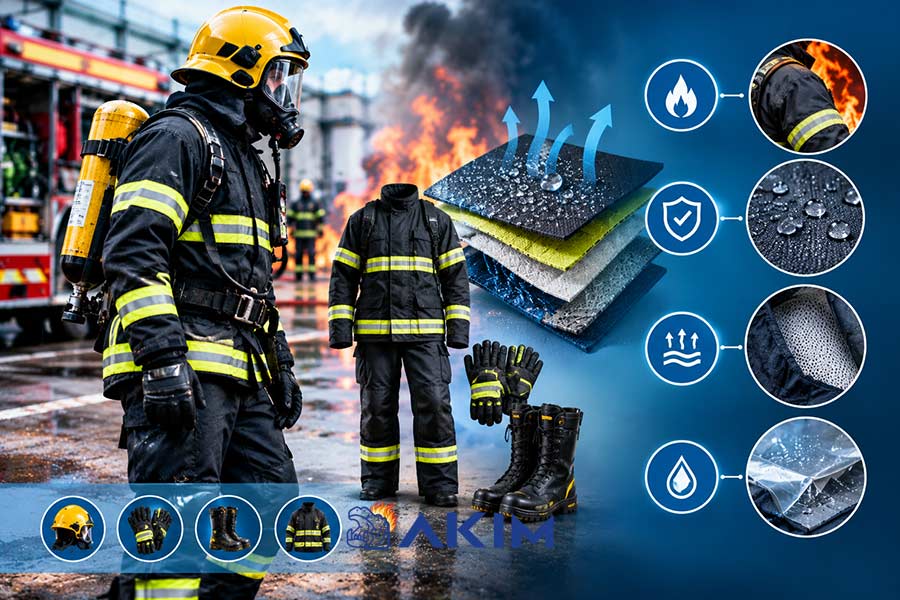
The layers of firefighting protective clothing play a decisive role in protecting the wearer against heat, flames, moisture, and various external hazards. Modern firefighter clothing generally consists of multiple protective layers. While each layer performs a different function, the entire system works together to enhance the overall level of protection.
1. Outer Layer (Fabric)
The outer layer is the part of the clothing that is directly exposed to environmental conditions. It forms the first line of protection against flames, high temperatures, and mechanical abrasion, and in some cases, against water as well. In addition to the heat and flame resistance of the fabric used, it is important that the clothing allows response personnel to move freely and remain comfortable during operations.
2. Moisture Barrier
The moisture barrier is designed to limit the penetration of water and liquids from the outside into the inner layers while helping moisture generated by the body to escape. This layer plays an important role in firefighting environments, as controlling both external moisture and body moisture directly affects wearing comfort.
3. Thermal Barrier (Thermal Liner)
The thermal barrier (thermal liner) is one of the important protective layers designed to reduce the transfer of high temperatures to the wearer. Thanks to its thermal properties, this layer limits the transfer of heat from the external environment directly to the body. This construction contributes to protecting response personnel, particularly during structural firefighting operations.
4. Inner Lining
The inner lining is the part of the clothing that comes into contact with the wearer's body. It is important for comfort, sweat management, and ensuring that the clothing can be used properly. A well-designed inner lining helps provide comfort during prolonged operations while complementing the functions of the other protective layers.
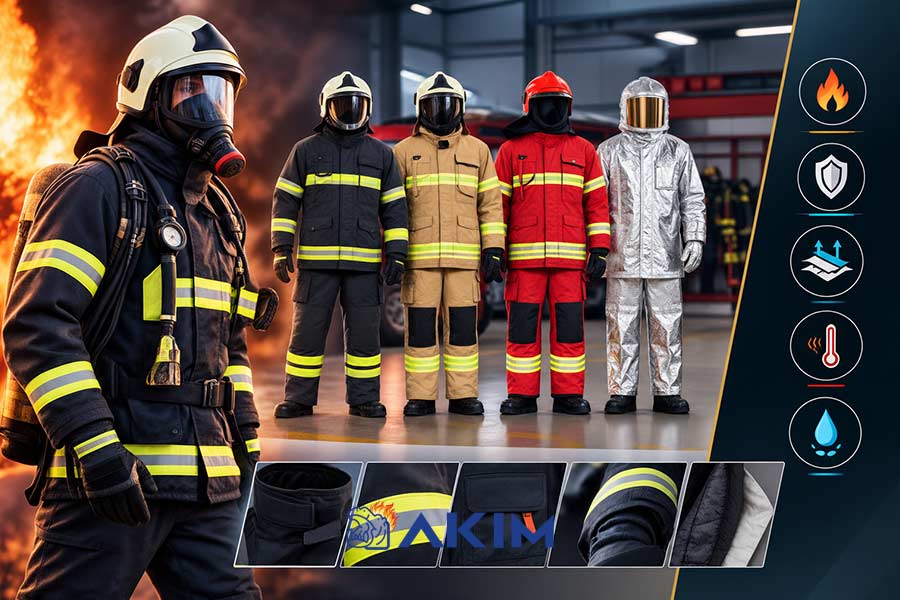
Types of firefighting protective clothing may vary depending on the nature of the fire being tackled and the working environment. It is not appropriate to use the same clothing for every type of fire environment. A suit used for structural firefighting may have different protective properties from garments designed for specialized operations that require approaching areas exposed to high radiant heat.
Structural Firefighting Clothing (EN 469)
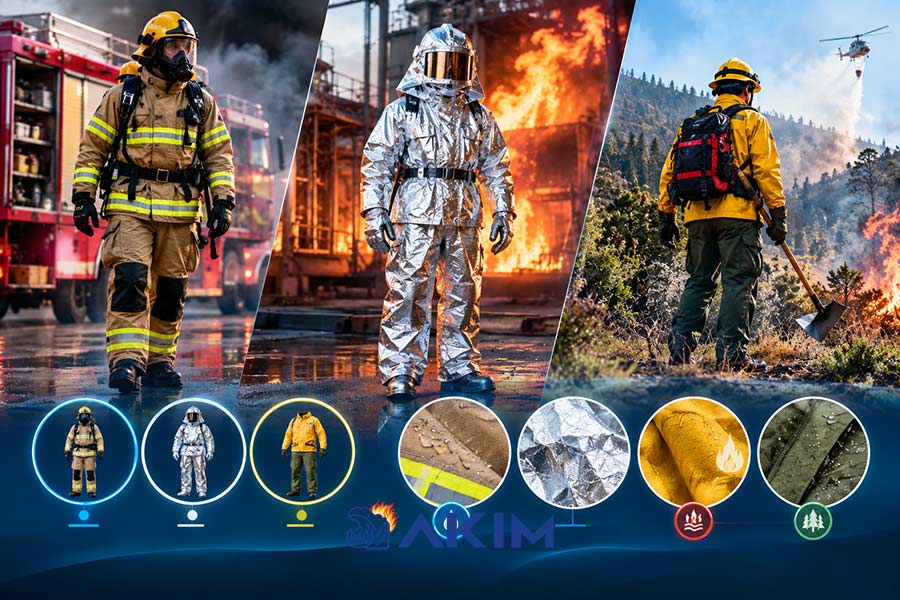
Structural firefighting clothing (EN 469) is developed for professional teams responding to fires in buildings, factories, warehouses, and similar structures. In addition to heat and flame protection, factors such as mobility, ergonomics, and durability are also taken into consideration.
Protective clothing evaluated under EN 469 is subject to performance requirements related to the thermal hazards that firefighters may encounter during structural fires. However, carrying the relevant standard alone is not sufficient; complementary equipment such as helmets, gloves, boots, and respiratory protective equipment should also be selected according to the intended use.
Aluminized Proximity Firefighting Clothing (EN 1486)
Aluminized proximity firefighting clothing (EN 1486) is among the protective garments used in specialized firefighting conditions where personnel may be exposed to intense radiant heat. The aluminized outer surface helps reflect radiant heat.
This type of clothing may be selected particularly for operations that require controlled approach toward sources of intense heat. The duration of use and intervention conditions should be evaluated together with other personal protective equipment.
Wildland Firefighting Clothing
Wildland firefighting clothing is designed according to the requirements of fire operations carried out in open areas. In addition to high temperatures, factors such as smoke, ash, sparks, difficult terrain, and prolonged physical activity should also be taken into consideration during wildfires.
Therefore, heat resistance alone is not sufficient; it is also important for the clothing to be lightweight and provide as much freedom of movement as possible. The operating environment is an important factor when selecting clothing for operations in which response teams may remain at the scene for extended periods.
Complementary Firefighting Equipment
Complementary firefighting equipment forms an integral part of the safety system provided by protective clothing. During firefighting operations, protecting only the torso and arms is not sufficient. The head, face, hands, feet, and respiratory system should also be protected with appropriate equipment.
A firefighting helmet helps protect the head against high temperatures, impacts, falling objects, and other environmental hazards. Models that can be used with visors or similar components providing face protection may offer additional protection during firefighting operations.
Flame-Resistant Hood (Balaclava)
A flame-resistant hood (balaclava) is an important complementary item of protective equipment, particularly for protecting the head and neck area. It provides additional protection in areas that may not be fully covered by the firefighting clothing or that are more vulnerable to heat and flames.
Heat-Resistant Firefighter Gloves
Heat-resistant firefighter gloves help protect the hands against high temperatures, flames, cuts, and mechanical hazards. When selecting gloves, grip capability should be considered alongside protection. During firefighting operations, hoses, valves, equipment, and various tools need to be handled safely and securely.
Firefighting Boots
Firefighting boots are designed to protect the feet against high temperatures, water, slipping, punctures, and various mechanical hazards. The use of suitable boots is particularly important in environments where broken glass, metal fragments, and hot surfaces may be present.
Respiratory protective equipment, including a clean-air cylinder and face mask, is critically important in environments containing dense smoke and hazardous gases that may be generated during a fire. Intervention without respiratory protection can pose serious risks, particularly during structural fires in enclosed spaces. Therefore, self-contained breathing apparatus should be used by trained personnel in accordance with the manufacturer's instructions and applicable procedures.
What Should Be Considered When Choosing Firefighting Protective Clothing?
When choosing firefighting protective clothing, the operation for which the clothing will be used should first be determined. The requirements for structural fires, wildland fires, and specialized operations involving exposure to high radiant heat are different. The product's compliance with relevant standards, material properties, conditions of use, available sizing options, and compatibility with other personal protective equipment should then be evaluated.
Fire safety is not limited to personal protective clothing. Fire detection, alarm, and suppression systems within a facility should be evaluated as an integrated system. For example, in electrical rooms, archives, server rooms, or areas containing sensitive equipment, Carbon Dioxide Fire Suppression Systems can be considered as one of the fire suppression solutions, provided that the system is appropriately designed and the necessary safety measures are implemented.
Therefore, when planning fire safety, personnel protection and firefighting methods should be addressed together.
Proper Equipment, Safe Intervention
Every second can be critical during firefighting operations. However, using the right equipment is just as important as responding quickly. When evaluated together with helmets, hoods, gloves, boots, and respiratory protective equipment, firefighting protective clothing forms a comprehensive approach to personal protection.
At Akım Yangın ve Güvenlik Sistemleri, we place importance on evaluating the equipment and systems used for fire safety according to actual needs. You can contact us to determine the requirements of your facility, site, or workplace and obtain information about suitable fire safety solutions. Let us assess the fire risks together and plan the solutions you need for your safety.
Free Project Analysis
We provide customized solutions tailored to your needs, together with competitive quotations and professional support from our expert team, as quickly as possible.